


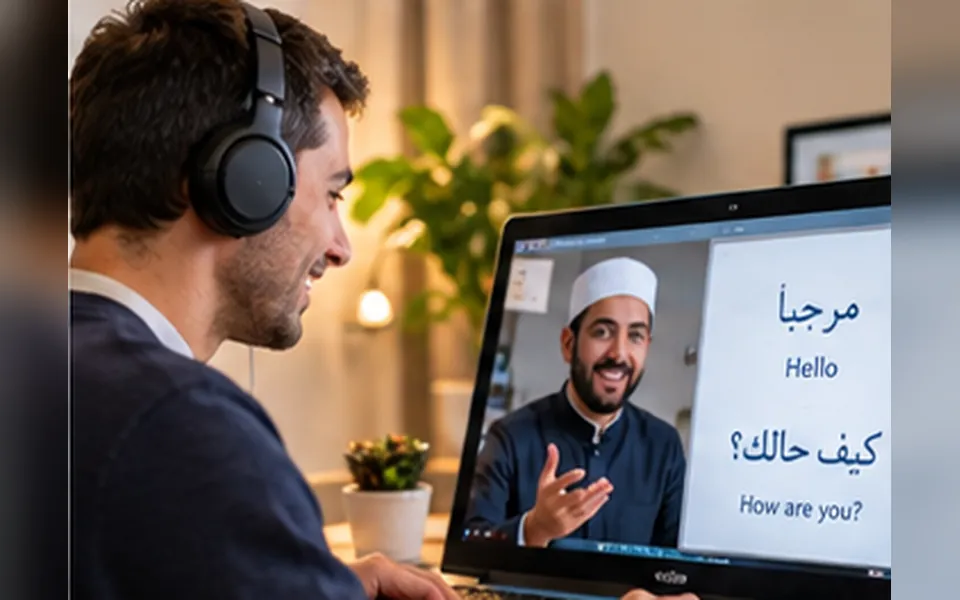
Mawaddah Academy offers live online Arabic classes for children and adults, including beginners who do not speak Arabic and children growing up in multilingual homes. Start with letters and sounds, build reading and conversation skills, or study Quranic Arabic if your goal is to understand more of what you recite.
Arabic for complete beginners
Beginners start with letters, sounds and how letters change shape inside words. The next steps are short-vowel reading, common words and simple sentences. The goal is to turn recognition into usable reading and communication.
Arabic reading and writing
Students practise decoding words, reading short texts, spelling and writing. Lessons can slow down for learners who need stronger foundations or move faster for students who already know the alphabet.
Arabic vocabulary and conversation
Vocabulary is introduced in context so the learner can use it in sentences. Conversation practice can include greetings, family, daily routines, school, work, travel and other useful topics.
Arabic grammar without overload
Grammar is taught when it supports real understanding and expression. Instead of beginning with heavy terminology, the teacher can connect rules to sentences the learner is already reading and using.
Quranic Arabic
Learners who want to understand Quran vocabulary can gradually study common Quranic words, roots and sentence patterns after building an appropriate reading foundation.
Arabic for kids
Children benefit from shorter tasks, repetition, clear goals and a teacher who can hold attention. Parents can see homework and progress reports through the academy system.
Arabic for adults
Adults may study for family, travel, work, Islamic learning or Quran understanding. Private lessons can focus quickly on the learner’s exact goal, while small groups offer shared practice.
How Mawaddah tracks Arabic progress
After lessons, the teacher can record what was covered, homework, the next target and a progress score. Attendance and monthly progress remain visible in the learner’s record.
Flexible online Arabic schedules
International learners can request times that fit their local time zone. Study plans can include 8, 12, 16 or 20 classes per month or a daily option.
Frequently asked questions
Do I need to know the Arabic alphabet?
No. Complete beginners can start with letters and sounds.
Can children learn Arabic online?
Yes. The learning path and teaching pace are adjusted to age and level.
Can I focus on speaking?
Yes. A program can emphasise conversation, vocabulary and listening while keeping enough reading and grammar to support progress.
Book a free Arabic trial and placement review or read our beginner Arabic roadmap.
My child understands Arabic but answers in English. Where should we start?
Start with familiar situations, such as asking for food or describing a toy. Help your child use a familiar word in a short sentence. During placement, tell the teacher what your child understands and what they can say independently so the teacher can choose suitable speaking practice. If reading or Quranic vocabulary is your goal, mention it when you request two free trial lessons.
Start Arabic at your level
Learners new to Arabic can start with letter shapes and sounds, then move to joined letters, sentences and conversational practice. Compare the course pathway with the self-study reading tools.